
Call : +8613928771510, +8615218851418
 Send Inquiry
 Send Inquiry
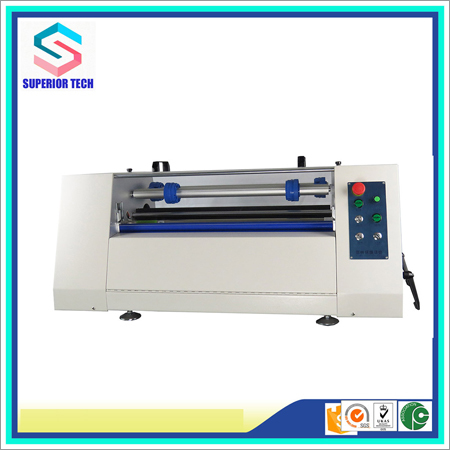
V Groove Residual Thickness Tester
MOQ : 1 Set
V Groove Residual Thickness Tester Specification
- Model No
- VGT-100
- Operating Temperature
- 0C to 50C (ambient)
- Drive
- Manual
- Accuracy
- 0.01 mm
- Features
- High precision, portable, easy calibration, robust construction
- Noise Level
- Silent/non-electric
- Machine Type
- Manual tester
- Frame Type
- Bench-top, rigid frame
- Control System
- Manual lever with dial indicator
- Product Type
- Thickness Tester
- Technology
- Mechanical measurement
- Power Source
- Manual
- Operating Type
- Hand operated
- Power
- Not required (manual)
- Pressure
- Manual, not dependent on external pressure source
- Surface Treatment
- Powder coated/painted
- Dimension (L*W*H)
- Approx. 250 x 100 x 150 mm
- Weight (kg)
- 2-4 kg (approx.)
- Color
- Blue/silver finish
- Production Capacity
- Up to 30 measurements per hour
- Usage & Applications
- For checking and measuring residual thickness of V Groove on pipes or sheets
- Indicator Type
- Plunger-type dial gauge
- Compliance
- Meets industrial and laboratory testing norms
- Marking
- Engraved scale for direct reading
- Portability
- Handheld, lightweight
- Operator Skill Level
- Basic technical skill
- Measuring Principle
- Contact type mechanical measurement
- Sample Compatibility
- Pipes, sheets with V Groove geometry
- Working Speed
- Operator dependent
- Packaging
- Supplied in protective carrying case
- Maintenance
- Periodic cleaning and zero calibration required
- Resolution
- 0.01 mm
- Calibration Standard
- Factory calibrated, traceable to ISO standards
- Display Type
- Analog Dial Gauge
- Material of Construction
- Hardened steel with painted finish
- Measuring Range
- 0-10 mm
- Storage Condition
- Dry, protected from dust and corrosion
V Groove Residual Thickness Tester Trade Information
- Minimum Order Quantity
- 1 Set
- FOB Port
- HUANGPU
- Supply Ability
- 100 Sets Per Month
- Delivery Time
- 15 Days
- Certifications
- SGS
About V Groove Residual Thickness Tester
We have successfully offering a wide range of reliable working V Groove Residual Thickness Tester that is made by using rich resources along with advanced technology. Our offered tester is generally used to measure thickness of metals, glasses, plastics, fiber glasses and ceramics. In addition, we provide this V Groove Residual Thickness Tester to the customers at economical prices within given time frame. Our offered tester is highly in demand for its impressive features such as fine finishing, hassle free performance, robust construction, low maintenance etc.
Structural features:
- simple operation, easy to use
- Procurement joint venture high-precision measurement meter
- Digital display accuracy 0.02mm
- Effectively extend the longest dimension 250mm
- Long life of super hard steel round cutter head
- The metric system can be switched
- Machine size: 395mm*365mm*500mm
High-Precision Analog Measurement
Equipped with a plunger-type analog dial gauge, the V Groove Residual Thickness Tester offers highly accurate measurements down to 0.01 mm. Its rigid steel frame and direct-reading engraved scale allow precise evaluation of V Groove residual thickness in a variety of shapes and materials, ensuring dependable performance for industrial and laboratory environments.
Portable and User-Friendly Design
The testers ergonomic, lightweight build (approx. 24 kg) ensures easy portability, allowing operators to perform measurements on-site or at the bench. No electricity is required for operation, making it especially useful where power sources are limited. Its simple manual lever and dial system require only basic technical skill for effective use.
Durable Construction and Easy Maintenance
Manufactured from hardened, powder-coated steel with a painted finish, this tester is designed for lasting reliability. Routine maintenance involves periodic cleaning and zero calibration. The tester should be stored in dry, dust-free conditions to preserve optimal performance, and its robust protective carrying case ensures safe transport and storage.
FAQs of V Groove Residual Thickness Tester:
Q: How does the V Groove Residual Thickness Tester measure thickness?
A: The tester uses a plunger-type analog dial gauge and a contact-type mechanical measurement principle. When placed on a V Groove of a pipe or sheet, the plunger makes direct contact with the surface, registering the residual thickness on the analog dial with a resolution of 0.01 mm.Q: What types of samples can be tested with this device?
A: This tester is compatible with pipes and sheets that feature a V Groove geometry. It is primarily used for assessing residual thickness in materials used in fabrication, inspection, and quality control processes.Q: When should I recalibrate or maintain the tester?
A: Periodic zero calibration is recommended, especially after frequent use or when readings appear inconsistent. Maintenance involves keeping the tester clean and storing it in dry, dust-free conditions to prevent corrosion and ensure longevity.Q: Where can the tester be used most effectively?
A: Its handheld, bench-top frame allows for versatile use in both laboratory settings and industrial sites. Thanks to its lightweight construction and protective carrying case, its portable and suited to on-site measurements as well.Q: What is the standard process for conducting a measurement?
A: Place the tester securely onto the V Groove of the pipe or sheet. Operate the manual lever to lower the plunger into the groove. Read the thickness value directly from the engraved scale on the analog dial, ensuring the device is zeroed before usage for optimal accuracy.Q: What benefits does this tester provide over electronic gauges?
A: As a mechanical, manual device, it operates without power, is silent, easily transported, and highly robust. Its analog dial provides reliable, direct readings, making it ideal for environments where electronics may be impractical or susceptible to interference.Q: Who can operate this tester?
A: The device is designed for users with a basic level of technical skill. No advanced training is required, and its simple operation ensures consistent results across routine inspections or sample analyses.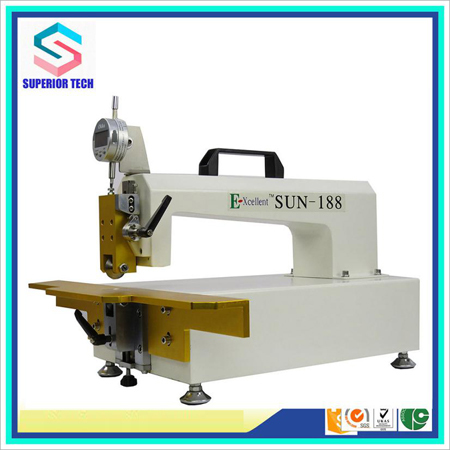
Tell us about your requirement

Price:
Quantity
Select Unit
- 50
- 100
- 200
- 250
- 500
- 1000+
Additional detail
Mobile number
Email

More Products in PCB Other Small Machines Category
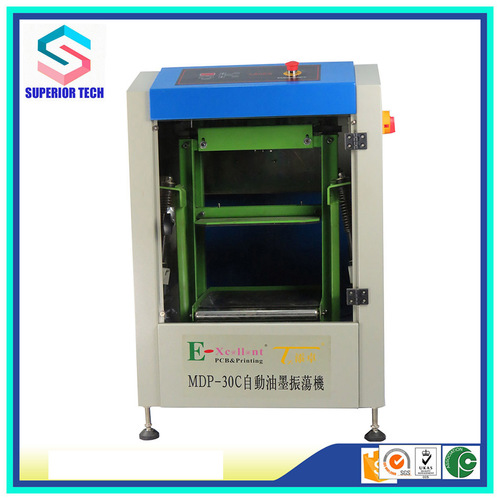
Ink Mixing Machine
Features : Low Maintenance, Corrosion Resistant, Easy Operation
Machine Type : Industrial Mixer
Usage & Applications : Mixing offset, gravure, and flexo printing ink
Frame Type : Mild Steel Welded Frame
Color : Blue and White
Voltage : 220 V / 380 V
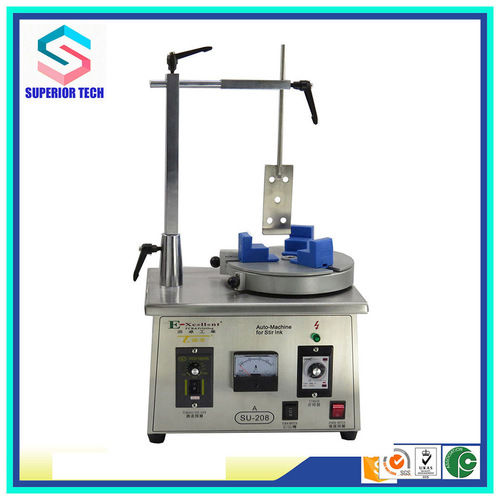
Ink Mixer SU-208
Features : Speed control Digital display Durable frame
Machine Type : Ink Mixer
Usage & Applications : Ink mixing for printing and manufacturing
Frame Type : Stainless steel frame
Color : Silver/Chrome
Voltage : 220V
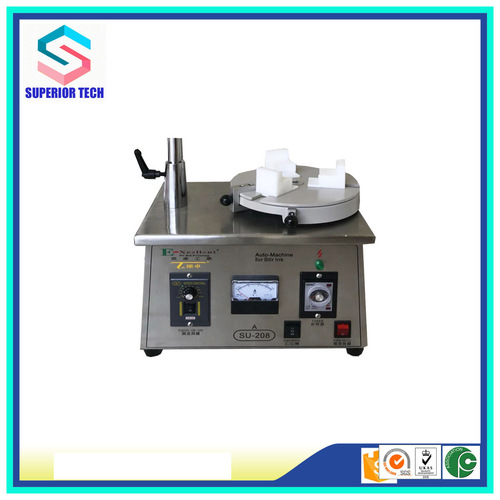
Ink Mixer SU-208A
Features : Precise ink mixing durable frame userfriendly interface
Machine Type : Ink Mixer SU208A
Usage & Applications : Mixing ink for printing applications
Frame Type : Steel Frame
Color : Grey
Voltage : 110V/220V

Contact Details
- Room 101 Of Building 8, West 3 Street Of Zhuzhai New District Xiaolong Village, Shiji Town, Panyu, Guangzhou - 511450, Guangdong, China
- Phone :86-20-34559683
 Send Inquiry
 |
GUANGZHOU SUPERIOR TECH CO. LTD.
All Rights Reserved.(Terms of Use) Developed and Managed by Infocom Network Private Limited. |
